
What Is Physical AI? A Clear Guide to AI That Acts in the Real World
For the last few years, the AI that captured everyone's attention lived behind a screen. It wrote emails, generated images, and answered questions. Useful, but trapped in software. The harder problem has always been getting a machine to do something physical and useful in a messy, unpredictable room full of people, objects, and surfaces that don't sit still. That problem is the one physical AI is built to solve, and 2025 and 2026 were the years it stopped being a research demo and started showing up on factory floors.
The short answer
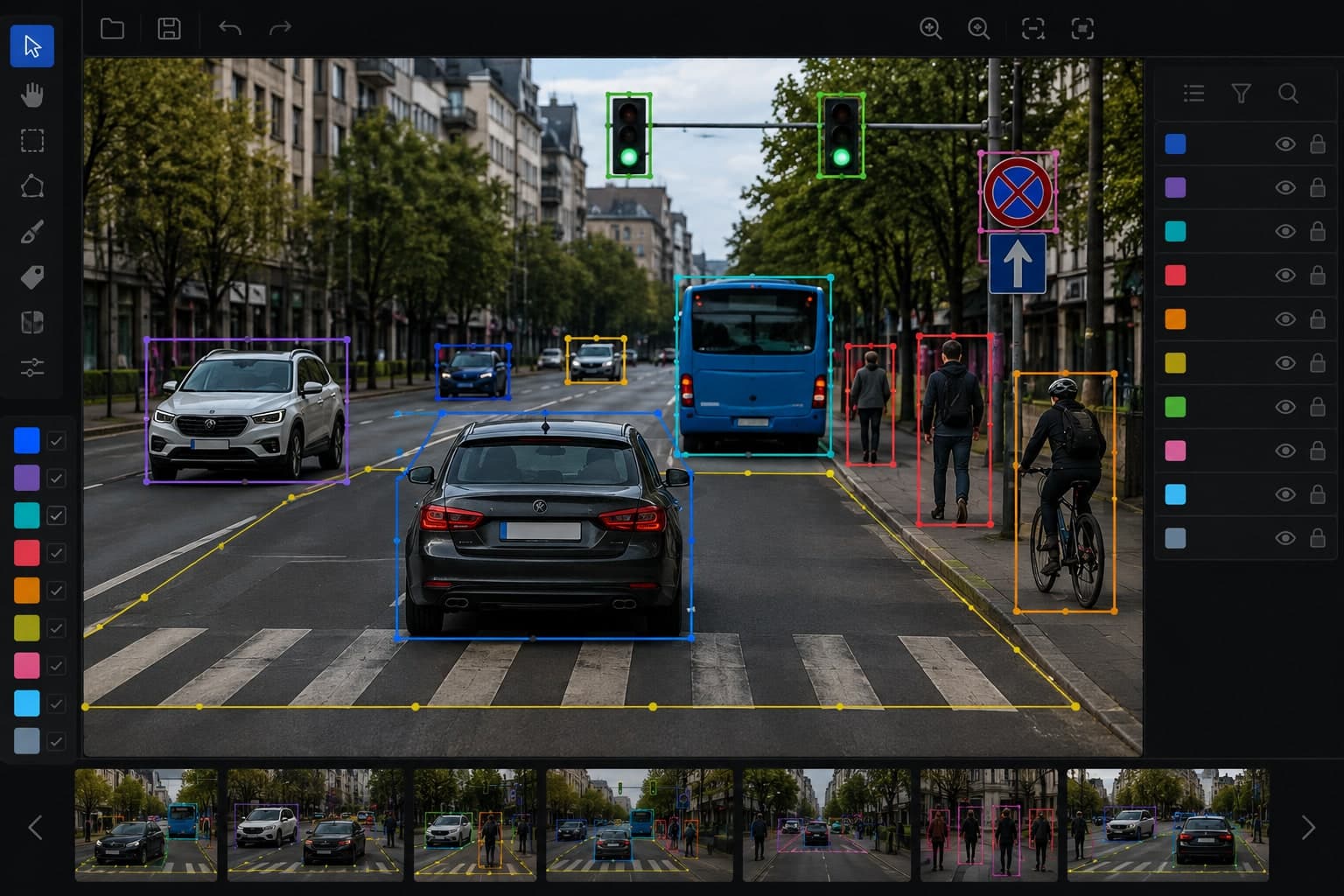
Physical AI is artificial intelligence that perceives, reasons about, and acts in the real, physical world. Instead of only producing text or images, a physical AI system takes in data from sensors, decides what to do, and then moves something: a robot arm, a wheeled cart, a humanoid, a car. The classic example is the difference between describing a task and doing it. A chatbot can explain how to pour a cup of coffee. A physical AI system has to find the cup, judge the distance, grip the handle with the right amount of force, and pour without spilling, all in real time as conditions change.
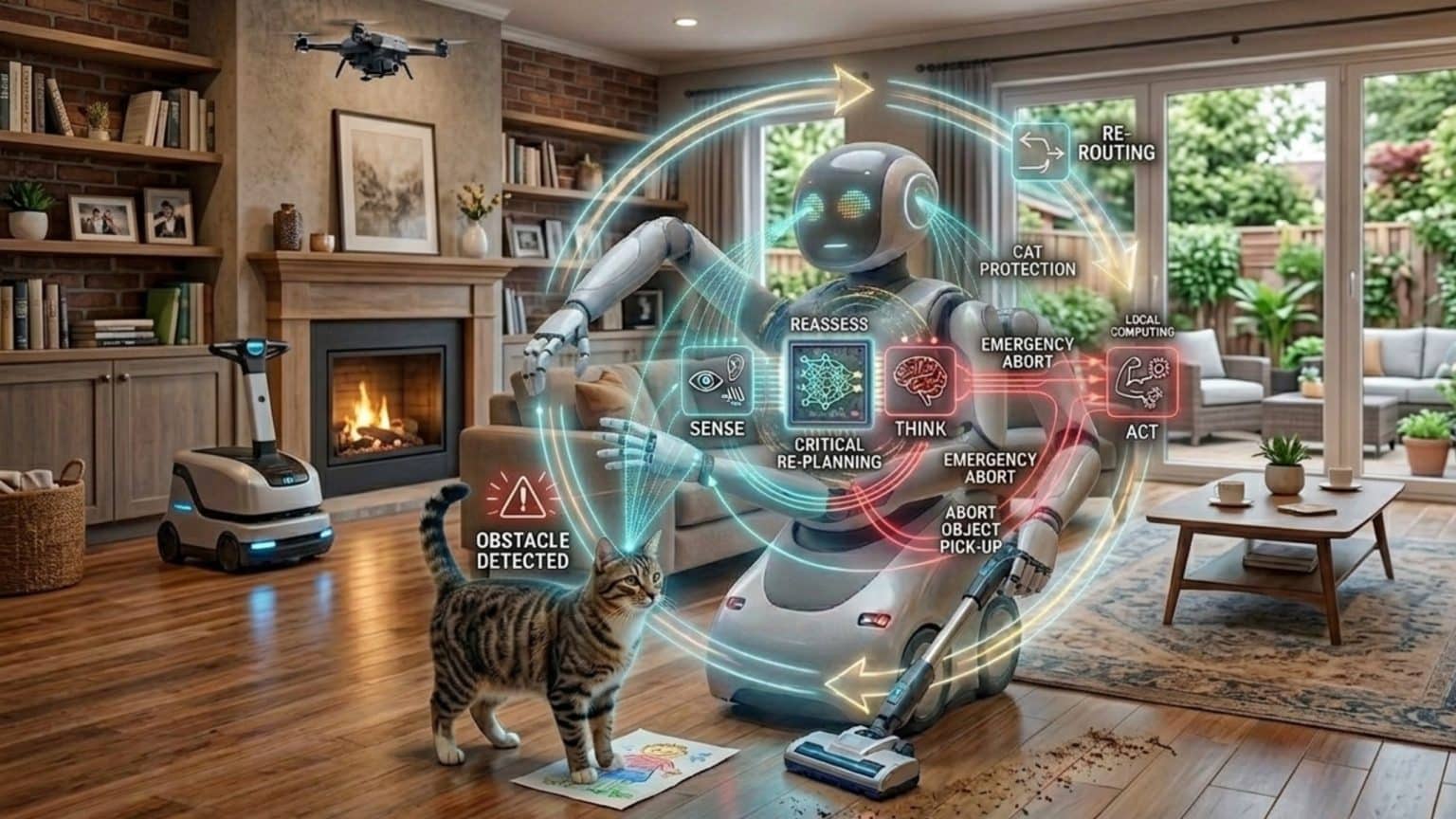
That sensing-deciding-acting loop is the whole game. Everything else is detail.
Physical AI vs. the AI you already know
A lot of the confusion around this term comes from how close it sits to three other ideas. Here's how they actually differ.
| What it does | Lives where | Example | |
|---|---|---|---|
| Generative AI | Creates new content from patterns | Software only | A model that writes a product description |
| Traditional automation | Repeats pre-programmed steps | Hardware, but rigid | A factory robot welding the same spot on every car |
| Embodied AI | Grounds intelligence in a physical body (research framing) | A robot or agent with a body | A lab robot learning to manipulate objects |
| Physical AI | Senses, reasons, and acts in the real world (industry umbrella) | Bridges software and hardware | A warehouse robot that navigates around people it has never seen before |
Two distinctions matter most. First, physical AI is not the same as generative AI, even though both are "AI." Generative AI produces outputs. Physical AI produces actions. Second, physical AI is not old-school automation with a new coat of paint. A pre-programmed welding robot does exactly one thing in exactly one spot and stops working the moment a part shifts. A physical AI system adapts. It can adjust its grip based on where an object actually landed on the conveyor, or reroute around an obstacle that wasn't there a second ago.
"Embodied AI" is the term researchers tend to use for the same territory. In practice, the industry has settled on "physical AI" as the broader label for AI that deals with physics, motion, sensors, and real-world execution.
Why physical AI is having a moment right now
This is the part most explainers skip, and it's the part worth understanding. Robots are not new. Factory automation has existed for decades. So why is everyone suddenly talking about physical AI?
The answer is not hardware. It's the model layer, and it changed fast between 2025 and 2026.
The bottleneck in robotics was never really the motors or the cameras. It was data. A large language model can train on a huge slice of the public internet. There is no equivalent internet of robot movements. Every grasp, every step, every recovery from a stumble had to be hand-collected or hand-coded, which made progress slow and expensive. This is why a robot can lose a chess game to a child but still struggle to pick up the chess pieces. The hard part for machines is the physical stuff humans find effortless.
Two breakthroughs cracked the data problem open:
World foundation models
These models learn the physics of the real world well enough to generate synthetic training data on demand, including realistic video of how objects move, fall, and collide. NVIDIA's Cosmos platform, first released in January 2025 and updated to Cosmos 3 in June 2026, is the most prominent example. Cosmos 3 is built as an "omnimodel" that handles text, images, video, sound, and actions in a single system, which lets developers cut training and evaluation from months to days. Jensen Huang has called this the "ChatGPT moment for robotics," and whether or not you buy the hype, the data economics genuinely shifted.
Vision-language-action (VLA) models
These connect what a robot sees and is told to a sequence of physical movements. Google DeepMind's RT-2 was an early proof point, and by 2026 models like NVIDIA's Isaac GR00T (purpose-built for humanoids) and Figure AI's Helix were doing generalist control rather than single-task scripting. The practical recipe in 2026 looks like this: pre-train mostly on simulated and synthetic data, then fine-tune on a small batch of 50 to 100 real-world demonstrations for the specific task. Teams at CMU and Stanford reported policies trained on roughly 40% synthetic data matching ones trained entirely on real data.
In plain terms: robots can now learn from imagined-but-physically-accurate worlds instead of needing every lesson to happen with real hardware. That's the unlock.
How a physical AI system actually works
Strip away the marketing and almost every physical AI system runs the same loop, supported by the same rough stack.
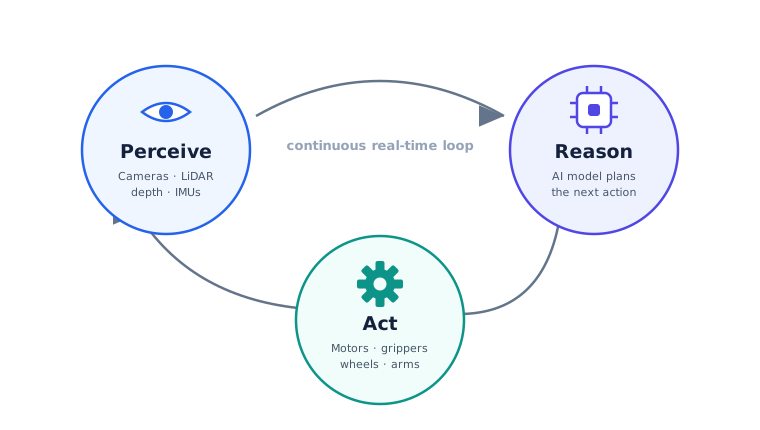
The perceive–reason–act loop
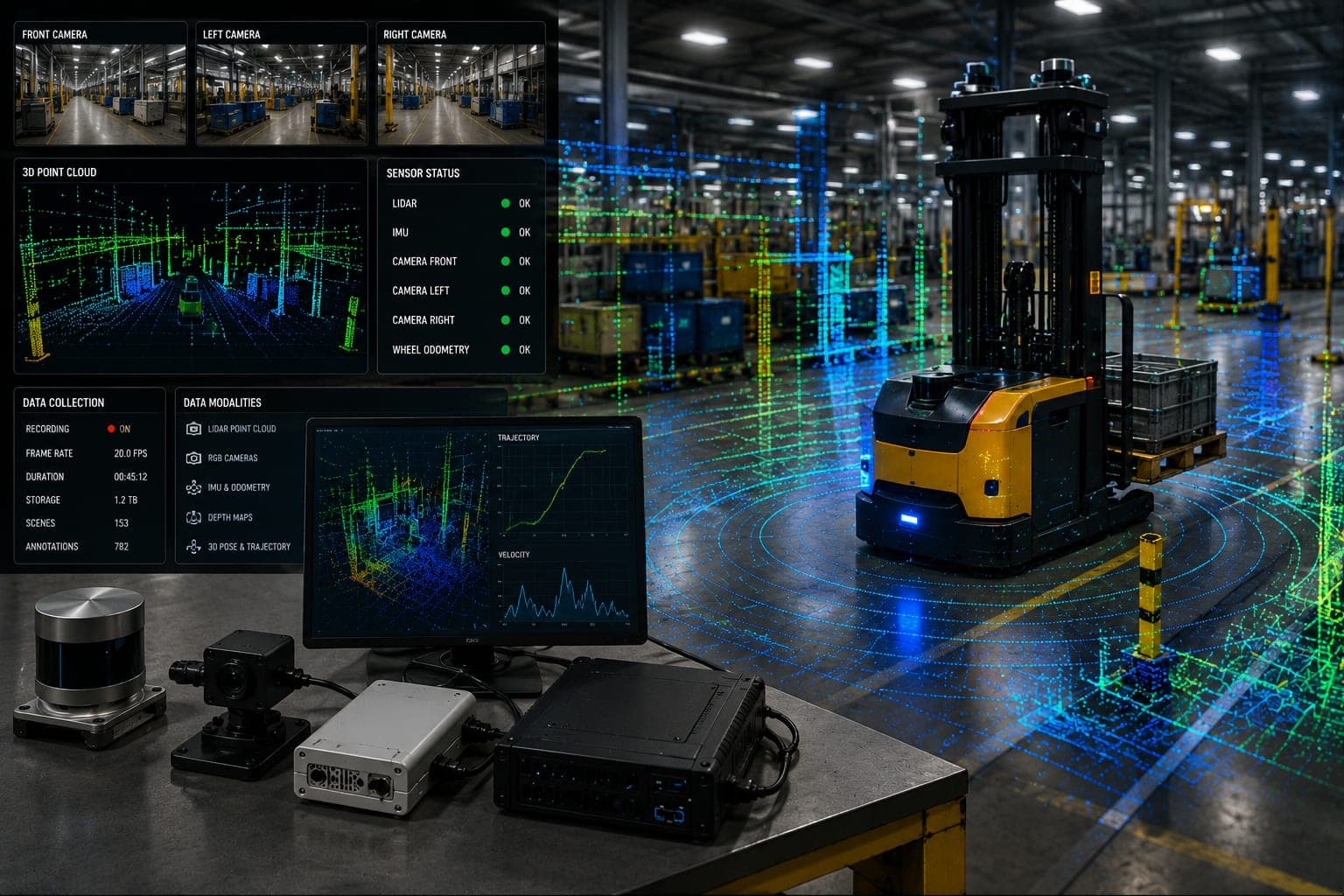
- Perceive. Cameras, LiDAR, microphones, depth sensors, and inertial measurement units (IMUs) feed the system a picture of its surroundings.
- Reason. AI models interpret that data, build an understanding of the space, and decide on a plan. Newer systems split this into a fast, reflexive layer for immediate reactions and a slower, deliberate layer for planning, an approach NVIDIA describes as a dual-system architecture.
- Act. Motors, actuators, and grippers carry out the plan, and the results feed straight back into the next round of perception.
The three-computer pattern
Building these systems usually involves three separate computing environments. A training computer (large GPU clusters) builds the foundation models. A simulation computer creates photorealistic virtual environments where a robot can rehearse millions of scenarios before touching real hardware. And an onboard computer, edge silicon like NVIDIA's Jetson Thor or Qualcomm's robotics chips, runs the trained model inside the machine itself, fast enough to react in real time without phoning home to the cloud.
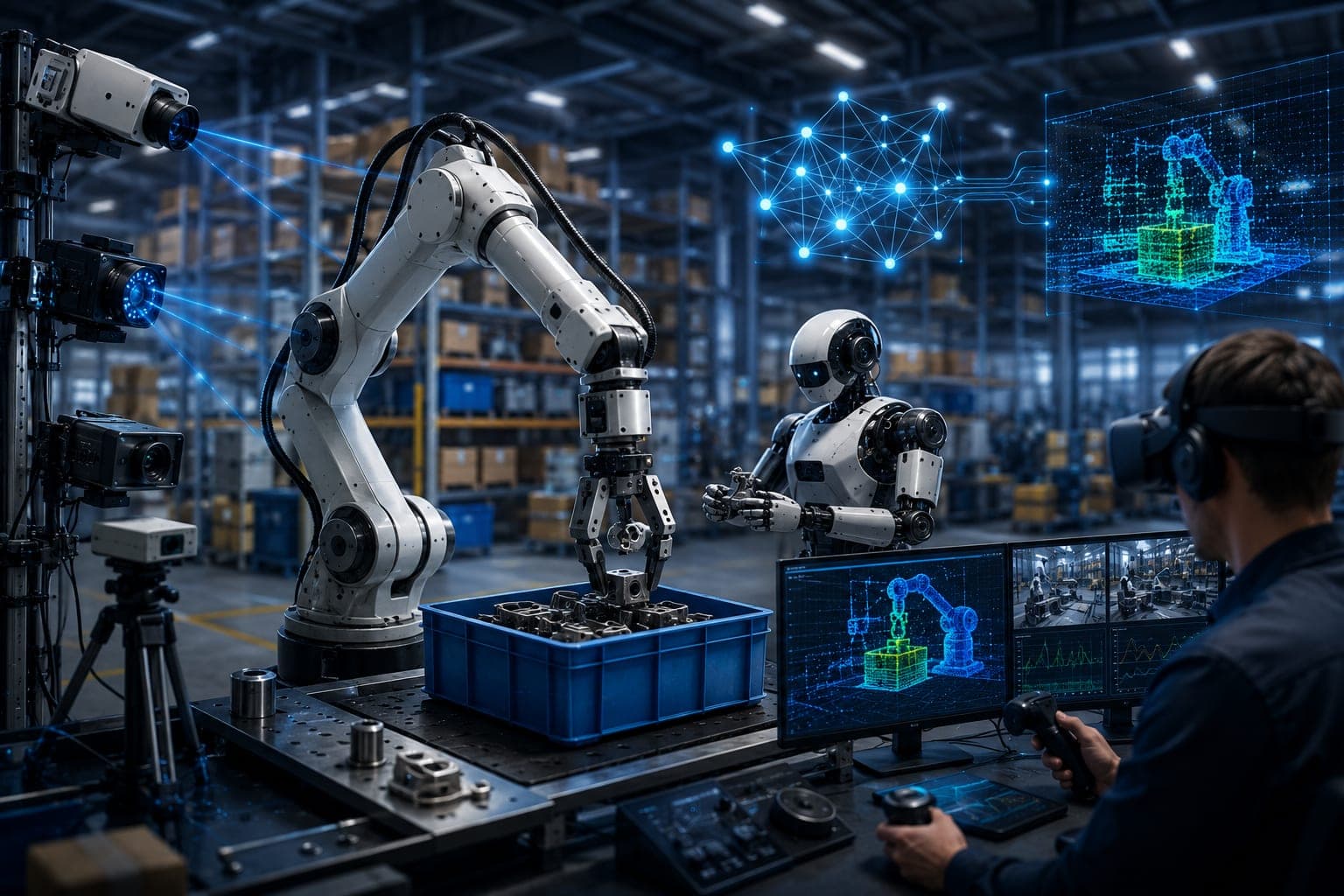
That middle step, simulation, is where the synthetic-data revolution pays off. A robot can fall down ten thousand times in a virtual warehouse overnight and arrive on the real floor the next morning already knowing how not to.
Where physical AI is running today
This is no longer a lab story. As of mid-2026, real systems are doing real work, though the picture is more "augmenting workers" than "replacing them."
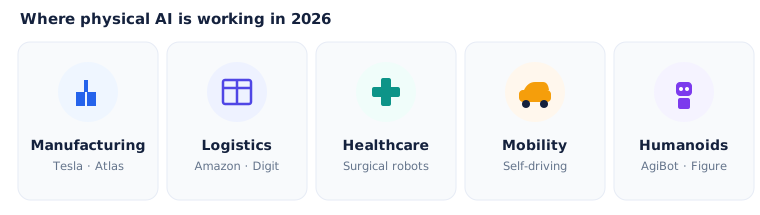
- Manufacturing. Tesla has deployed over 1,000 Optimus humanoid units inside its own factories, primarily at Gigafactory Texas, handling tasks like parts sorting and logistics kitting. Boston Dynamics' electric Atlas runs at Hyundai facilities. Agility Robotics' Digit operates in warehouse settings.
- Logistics. Amazon runs a fleet reported at over one million robots across its fulfillment network, the largest deployment of mobile robots anywhere.
- The humanoid race. China's AgiBot reportedly shipped around 5,100 humanoid units and captured a large share of its domestic market, a sign the field is global and moving quickly.
- Healthcare. Robotic surgical systems and patient-assistance robots use physical AI for precision and adaptability in high-stakes settings.
- Autonomous vehicles. Self-driving cars and trucks are physical AI in its most safety-critical form, perceiving and acting on the road continuously.
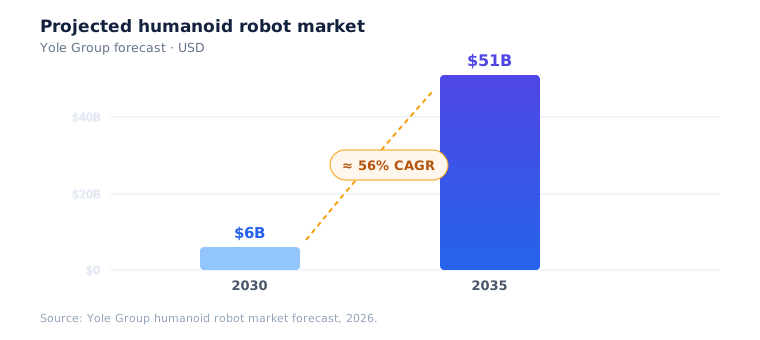
The money has followed. Robotics drew a record €38.5 billion in venture funding in 2025, and analysts at Yole Group project the humanoid market alone could exceed 51 billion by 2035. Broader robotics revenue forecasts run far higher.
The reality check most articles leave out
Here's the part that separates a useful read from a press release. The technology is real, but the gap between a polished demo and a reliable production system is still wide, and pretending otherwise does no one any favors.
The sim-to-real gap is the central technical risk. A policy that scores beautifully in simulation often stumbles in reality, because simulators don't perfectly capture friction, lighting, sensor noise, or the way a soft object deforms. One widely-cited Stanford finding from 2026 reported robots scoring nearly 90% success in controlled simulations but succeeding at only around 12% of real household tasks. The gap is narrowing fast, but it hasn't closed.
Hardware still limits the dream. Many humanoid robots run for only 90 to 120 minutes on a charge, well short of the 8-to-20-hour shifts real jobs require. Battery life, durability, and the cost of dexterous hands remain stubborn engineering problems.
This is augmentation, not replacement, for now. The honest framing comes from inside the industry itself. Bessemer Venture Partners described the field in 2026 as being at a "GPT-2.5 moment": capabilities are real and scaling laws are starting to appear, but the leap to the 99.9% reliability that unsupervised production demands hasn't happened yet. If you're evaluating a vendor, the single most useful thing you can do is insist on a demonstration under your actual conditions, not their staged demo environment.
There's also a quieter point worth making. More robots do not automatically mean more value, just as more web pages never meant a better website. The companies winning with physical AI are the ones solving a specific, expensive, real-world problem, not the ones with the flashiest stage demo.
What to watch next
A few developments are worth tracking through the rest of 2026 and into 2027. World models are expected to start shipping as a standard component in commercial robots rather than an experimental add-on. Cross-embodiment learning, where a skill learned on one robot body transfers to a different one, is improving but still limited by how differently robots are built. And safety standards are catching up: the U.S. already has ANSI/A3 R15.06-2025 governing human-robot collaboration in manufacturing, and compliance is becoming a prerequisite for insurance and deployment.
The trajectory is clear even if the timeline isn't. The intelligence layer has arrived. The remaining work is largely about reliability, batteries, cost, and trust, the unglamorous problems that decide whether a technology graduates from pilot to platform.
The bottom line
Physical AI is the point where artificial intelligence steps off the screen and into the room. The definition is simple, sense, reason, act, but the shift behind it is significant: AI that can finally learn the physical world the way large language models learned language. The hardware has existed for years. What changed in 2025 and 2026 was the arrival of models that can teach machines to handle a world that refuses to hold still. That intelligence is here. The reliability is still catching up, and anyone deciding whether to invest in it should weigh both halves of that sentence equally.
Frequently asked questions
What is physical AI in simple terms?
Physical AI is artificial intelligence that senses its surroundings, decides what to do, and then takes physical action in the real world, through robots, vehicles, or machines, rather than only producing text or images on a screen.
What is the difference between physical AI and generative AI?
Generative AI creates content such as text, images, or code. Physical AI takes action in the physical world. One writes a description of pouring coffee; the other actually finds the cup and pours it.
Is physical AI the same as robotics?
Not quite. Robotics is the hardware and engineering of building machines. Physical AI is the intelligence that lets those machines perceive, reason, and adapt instead of just following fixed instructions. Modern robots increasingly run on physical AI, but plenty of older automation does not.
What is a world foundation model?
A world foundation model is an AI model that has learned the physics of the real world well enough to generate realistic, physics-accurate synthetic data, like video of how objects move and collide. It lets developers train robots without collecting every example from real hardware. NVIDIA's Cosmos is the best-known example.
What is a VLA model?
A vision-language-action (VLA) model connects what a robot sees and what it's told to do directly to physical movements. It's what lets a single model handle many tasks instead of being scripted for just one.
Is physical AI being used in the real world today?
Yes. Tesla, Amazon, Boston Dynamics, Agility Robotics, and others are running physical AI systems in factories and warehouses in 2026, alongside surgical robots and autonomous vehicles. Most current deployments augment human workers rather than fully replace them.
What's the biggest challenge holding physical AI back?
Reliability in unstructured, real-world conditions, often called the sim-to-real gap. Robots that perform almost perfectly in simulation frequently struggle with the variability of real environments. Battery life and hardware cost are close behind.